
Renting out a property comes with risk—and the biggest mistake landlords make is not screening tenants properly.
A tenant background check is one of the most important steps before approving a renter. It helps landlords verify identity, assess financial reliability, and reduce the risk of late payments, property damage, or eviction issues.
In 2026, with increasing rental demand and stricter compliance laws, tenant screening is no longer optional—it’s essential.
What Is a Tenant Background Check?
A tenant background check is a structured screening process landlords and property managers use to evaluate whether an applicant is financially reliable, responsible, and low-risk before signing a lease. It goes beyond a basic application by verifying key data points from trusted sources, helping you make objective, compliant, and defensible rental decisions.
In today’s rental market, a background check isn’t just best practice—it’s a risk management tool. When applied consistently, it reduces late payments, evictions, and property damage while improving tenant retention.
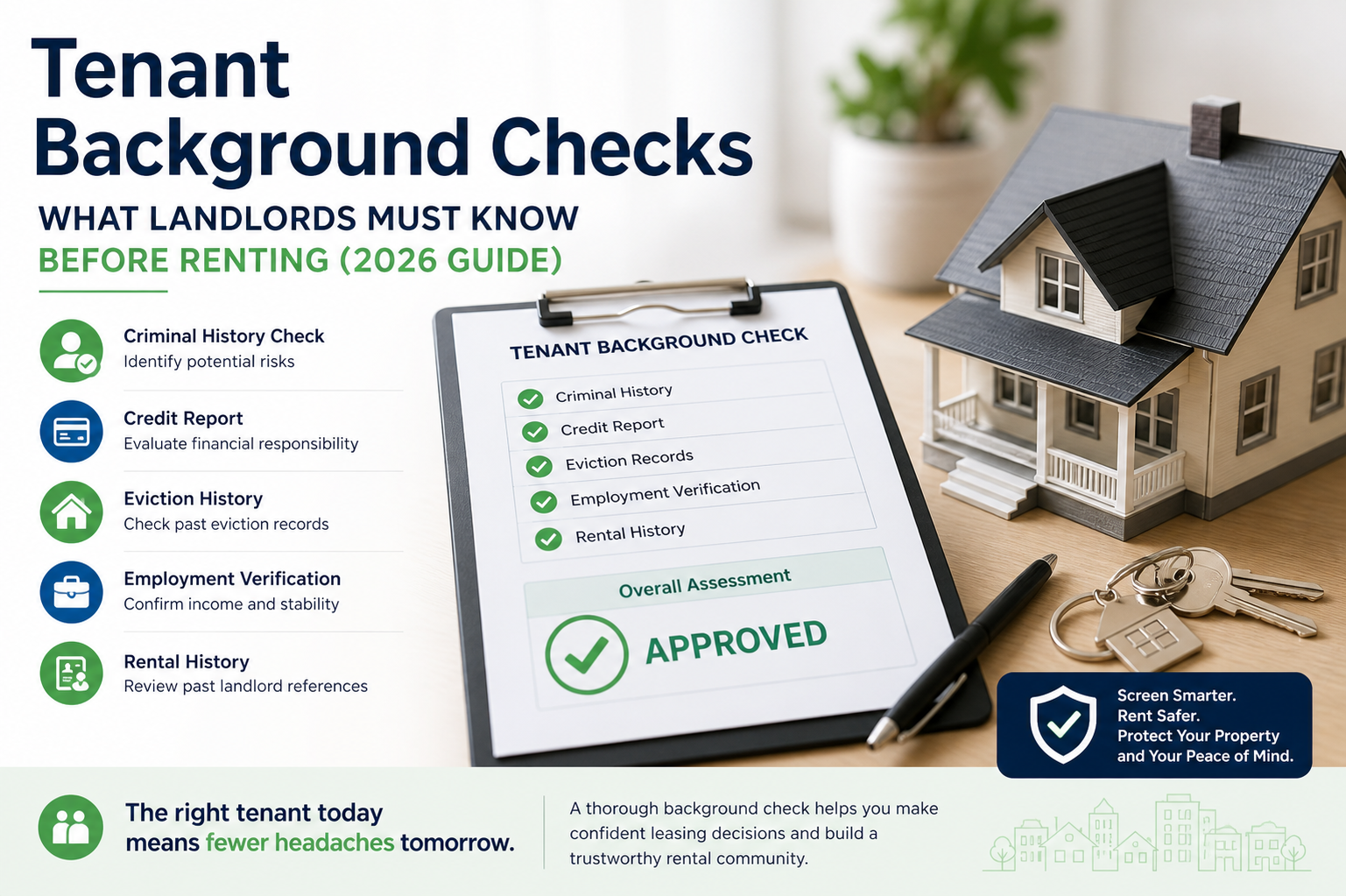
What a Tenant Background Check Typically Includes
A comprehensive screening package usually covers the following components:
1. Criminal Background Check
- Searches for felony and misdemeanor records (scope varies by jurisdiction and law)
- Helps assess safety risks to property and other tenants
- Should be evaluated in line with Fair Housing guidance (consider nature, recency, and relevance)
2. Credit Report & Score
- Reviews payment history, credit utilization, collections, and bankruptcies
- Indicates likelihood of on-time rent payments
- Common benchmarks: minimum score, debt-to-income considerations, and recent delinquencies
3. Eviction History
- Identifies prior eviction filings and judgments
- Highlights patterns of non-payment or lease violations
- Often one of the strongest predictors of future risk
4. Employment & Income Verification
- Confirms current employment, income level, and stability
- Supports affordability checks (e.g., 3x rent rule)
- May include pay stubs, employer contact, or bank statements
5. Rental History
- Verifies previous landlords, length of stay, and payment behavior
- Flags late payments, damages, or lease breaches
- Adds real-world context beyond credit scores
Why Tenant Background Checks Matter
Skipping tenant screening might save time upfront—but it often leads to expensive problems down the road. In today’s rental market, where evictions, property damage, and missed rent can quickly impact your bottom line, background checks are a must-have for every landlord.
From years of experience in the screening industry, one thing is clear: landlords who follow a consistent screening process see fewer issues, better tenants, and more reliable income.
Proper screening helps:
- Reduce the risk of missed rent
Checking credit and income helps confirm tenants can pay on time, every month. - Avoid costly evictions
Evictions can cost thousands in lost rent, legal fees, and turnover time. Screening helps catch red flags early. - Protect your property
Rental history and references give insight into how tenants have treated past properties. - Create safer communities
Background checks help ensure a safer environment for neighbors and other tenants. - Keep your cash flow consistent
Reliable tenants mean fewer vacancies and more predictable rental income.
How to Run a Tenant Background Check: Step-by-Step
Running a tenant background check is straightforward when you follow a clear, compliant process. The goal is to verify the applicant’s identity, financial responsibility, rental history, and potential risk before approving a lease.
Step 1: Get Written Consent
Before running any screening report, landlords must get the applicant’s written permission. This is required under the Fair Credit Reporting Act (FCRA).
Make sure consent is:
- Clearly provided by the applicant
- Documented before screening begins
- Stored with the rental application
Step 2: Collect Applicant Information
To run an accurate tenant screening report, collect basic identifying details from the applicant.
Common information includes:
- Full legal name
- Date of birth
- Current address
- Social Security Number, if applicable
- Employment details
- Previous rental history
Step 3: Choose a Reliable Screening Provider
Using a trusted provider helps ensure the reports are accurate, secure, and compliant. Platforms like Reveal Background simplify the process by helping landlords access tenant screening reports in one place.
Step 4: Run the Screening Reports
A complete tenant background check may include:
- Credit report and score
- Criminal background search
- Eviction records
- Employment or income verification
- Rental history review
These reports help landlords understand whether the applicant is financially stable and likely to follow lease terms.
Step 5: Review Results Carefully
Once the reports are complete, review them against your written rental criteria. Look for patterns, not just one isolated issue.
Key red flags may include:
- Recent evictions
- Repeated late payments
- Unverified income
- False application details
- Serious criminal records relevant to housing safety
Always apply the same screening standards to every applicant to help maintain a fair and compliant rental process.
Final Thoughts
Tenant background checks remain one of the most effective tools landlords can use to protect their property, income, and long-term investment. In a competitive rental market, relying on intuition alone is no longer enough—data-driven screening is essential.
By carefully verifying financial stability, rental history, and background information, landlords can reduce uncertainty and select tenants who are more likely to pay on time, respect the property, and maintain lease terms.
From years of industry experience, the difference between a smooth rental experience and a costly mistake often comes down to one step—proper screening.
At Reveal Background, we’ve seen that landlords who implement consistent tenant screening processes experience fewer evictions, better tenant relationships, and more predictable cash flow.
FAQs
1. What does a tenant background check include?
A tenant background check typically includes credit report, criminal history, eviction records, employment verification, and rental history. These checks help landlords evaluate a tenant’s financial stability and reliability.
2. How much does a tenant background check cost?
Tenant background check costs usually range between $20 to $75 per applicant, depending on the depth of screening and reports included.
3. What can disqualify a tenant during screening?
Tenants may be disqualified for low credit score, recent evictions, unstable income, or serious criminal history. Each landlord may set different criteria.
4. Do landlords always run tenant background checks?
Most professional landlords and property managers run background checks, especially when using platforms like Reveal Background for faster and compliant screening.
5. Can you get approved with bad credit?
Yes, tenants with bad credit can still get approved if they show stable income, provide a co-signer, or offer a higher deposit.