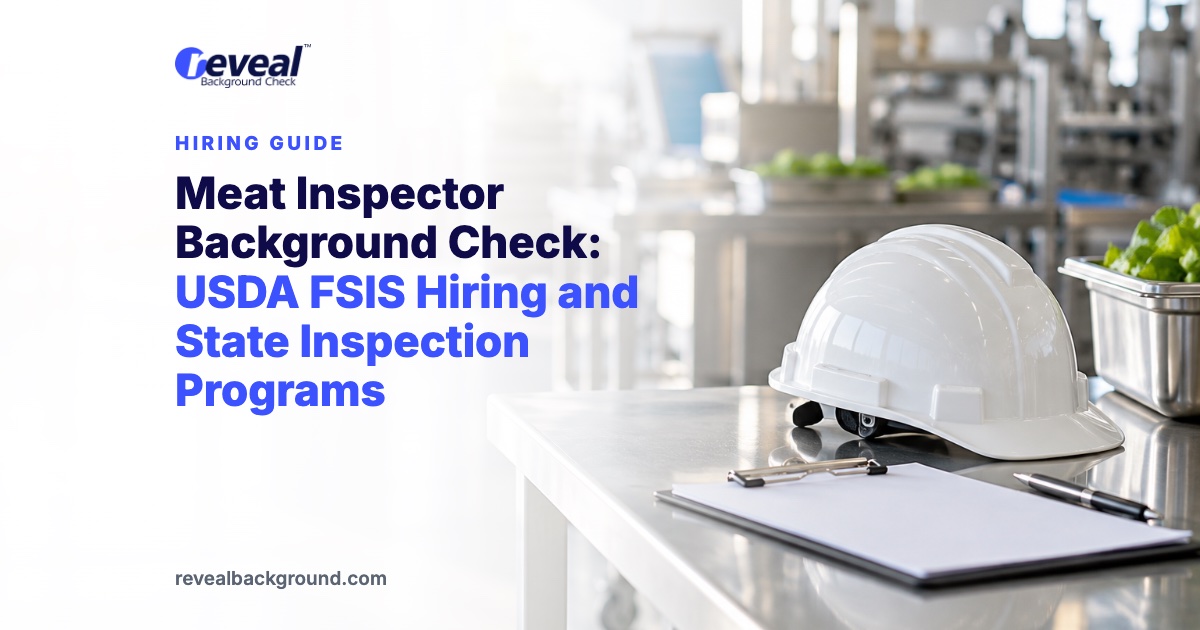
Meat inspection in the United States runs on two parallel tracks. Most inspectors work for the United States Department of Agriculture’s Food Safety and Inspection Service (FSIS) as federal civil service employees. A smaller number work for a state department of agriculture under a cooperative state meat inspection program. Both groups do similar work on the slaughter floor and in processing plants, but they are hired through different systems, and the background screening that applies to each one is different too. This guide explains what a meat inspector actually does, how federal hiring and suitability review work, how state programs fit into the picture, and where drug testing sits in the process.
What a meat inspector does
The federal personnel classification that covers this work is the Food Inspection Series, GS 1863. The Office of Personnel Management’s position classification standard for the series describes positions that involve inspecting the slaughter, processing, packaging, shipping, and storage of meat and meat products, poultry and poultry products, and related food establishments, in order to confirm compliance with laws and regulations that protect consumers by making sure products are not adulterated and are properly marked, labeled, and packaged. See the OPM Food Inspection Series, GS 1863 classification standard for the full series definition and grade level criteria. Inspectors verify humane handling, sanitation, and labeling, and they have authority to stop a production line when a plant is out of compliance.
The same OPM standard notes that food inspectors are routinely exposed to hazardous working conditions as an ordinary part of the job, including wet or icy floors, sharp knives used during inspection, moving processing equipment, and constant movement between refrigerated storage, below zero freezers, and warm cooking or incubation rooms. None of this is tested through a background check, but it is part of what hiring agencies and applicants should both understand going into the role, and it is one reason the position is classified and graded the way it is.
Federal hiring: USDA FSIS and the suitability process
Federal meat inspectors are hired into the competitive civil service, which means the government must determine that each applicant is suitable for federal employment before a final offer is confirmed. The rules for that determination sit in the Office of Personnel Management’s suitability regulation at 5 CFR Part 731, Suitability and Fitness. OPM describes itself as the federal government’s suitability and fitness authority, responsible for setting policy, adjudicating certain cases, and supporting agencies through the referral process, on its OPM Suitability program page.
Under Part 731, agencies and OPM may request a background investigation sufficient to resolve any suitability question, and that investigation generally examines things like employment history, education, and conduct that could affect an applicant’s fitness for the position. The regulation is specific about one sequencing rule that applies across the federal government: inquiries into an applicant’s criminal or credit history cannot begin until after a conditional offer of employment has been made. A finding during that review can support an unfavorable suitability determination, which can lead to withdrawal of a tentative offer or, for an employee already on board, a suitability action. Because every federal civil service hire goes through this same framework, the process for a meat inspector follows the same general structure used for many other federal positions, including the fingerprinting and records checks described in our guide to census worker background checks and the standard forms covered in our explainer on the SF-85, SF-85P, and SF-86 federal background check forms.
The scope and depth of the investigation depend on how the position is designated for risk and public trust, which FSIS and OPM determine, not the applicant. A record in an applicant’s history does not automatically end a federal application. Agencies are expected to weigh the nature of the conduct, how long ago it occurred, and its relevance to the duties of the position before making a suitability determination.
In practice, applicants apply for federal meat inspector openings the same way they would for any other competitive service position, through a posted job announcement that lists the required qualifications and the forms the applicant must complete. The specific background forms and the timing of fingerprinting and records checks are described in the job announcement and in onboarding instructions from the hiring agency, not decided by the applicant. Anyone unfamiliar with how this paperwork fits together can get a general sense of the process from our guide to federal background check forms linked above, though the exact steps for any opening always come from the official announcement rather than a general guide.
State inspection programs
Not every meat inspector works for FSIS. The Federal Meat Inspection Act allows states to run their own meat inspection programs, and federal regulation refers to these as cooperative state meat inspection programs. Under 9 CFR Part 332, establishments that operate under a cooperative state meat inspection program may apply to participate in the Cooperative Interstate Shipment program, which allows qualifying small plants to ship product across state lines under continued federal oversight. In practice this means a state department of agriculture, not FSIS, employs the inspectors who staff state inspected plants.
State inspectors are hired as state government employees, so they go through that state’s own civil service hiring rules rather than the federal suitability process described above. Those rules vary by state, and some states require fingerprinting and a criminal history check as a standard part of any state hire, while others apply narrower rules depending on the position. As one example, the Ohio Department of Agriculture’s Division of Meat Inspection administers that state’s meat and poultry inspection program, including licensing for custom exempt and fully inspected plants. Applicants interested in a specific state program should check that state’s own department of agriculture or state personnel agency for the exact background screening steps that apply, since no single rule covers every state.
Federal versus state meat inspector hiring
| Factor | Federal (USDA FSIS) | State inspection program |
|---|---|---|
| Employer | United States Department of Agriculture | State department of agriculture |
| Hiring authority | Federal competitive civil service | State civil service, rules vary by state |
| Suitability or background review | 5 CFR Part 731 suitability determination, OPM oversight | Set by individual state personnel rules |
| Criminal or credit history timing | Only after a conditional offer, per 731.106 | Varies by state |
| Legal basis for the inspection program | Federal Meat Inspection Act, FSIS regulations | Federal Meat Inspection Act, cooperative program under 9 CFR Part 332 |
| Interstate shipment of product | Automatically eligible | Eligible only through the Cooperative Interstate Shipment program |
Where drug testing fits
Drug testing is a separate process from the suitability or background check described above, and the two should not be confused. Federal agencies maintain drug free workplace programs under long standing executive branch policy, and certain positions, generally ones involving public health, safety, or law enforcement duties, may be designated as testing positions subject to pre employment or random drug testing. The Substance Abuse and Mental Health Services Administration maintains federal guidance and certification standards for these programs, described on its Drug Free Workplace Programs page. Whether a specific meat inspector position is designated for testing depends on the agency’s own position designation, and applicants should confirm this directly with the hiring agency rather than assume either way. State agencies set their own drug testing policies for state inspector positions, which again vary by state.
Frequently asked questions
Do meat inspectors need a background check?
Federal meat inspectors go through a suitability determination under 5 CFR Part 731 before their appointment is final. State meat inspectors go through whatever background screening that state applies to its own civil service hires, which varies by state.
Is fingerprinting required to become a meat inspector?
Fingerprinting is a standard part of many federal background investigations tied to the suitability process, though the exact scope depends on how OPM and the hiring agency designate the position. State requirements vary and should be confirmed with the specific state agriculture agency.
What is the difference between a federal and state meat inspector?
A federal meat inspector works for USDA FSIS under the federal civil service system and the suitability rules in 5 CFR Part 731. A state meat inspector works for a state department of agriculture under a cooperative state meat inspection program recognized in federal regulation, and is hired under that state’s own civil service rules.
Does a criminal record disqualify someone from becoming a meat inspector?
Not automatically. Federal suitability rules direct agencies to consider the nature of the conduct, how long ago it happened, and its relevance to the position before making a suitability determination. State rules vary, and applicants should check with the hiring agency rather than assume a record is an automatic bar.
Is drug testing part of the hiring process?
Drug testing is handled separately from the suitability or background review. Some federal positions are designated as testing positions under federal drug free workplace policy, and some state agencies apply their own drug testing rules to state inspector jobs. Applicants should confirm the specific policy with the hiring agency.
Can a state inspect meat without USDA involvement?
States can operate their own cooperative meat inspection programs under the Federal Meat Inspection Act, but federal oversight continues, and plants that want to ship product across state lines must do so through the Cooperative Interstate Shipment program under 9 CFR Part 332.
Employers who hire for food safety, quality assurance, or plant management roles connected to meat and poultry processing face their own screening decisions, separate from the government hiring process described above. Reveal Background helps employers run FCRA compliant employment background checks for roles across the food production supply chain.
This article is general information, not legal advice. Hiring and background check rules for federal and state meat inspector positions can change and vary by agency, so applicants and employers should confirm current requirements directly with USDA FSIS or the relevant state department of agriculture.