
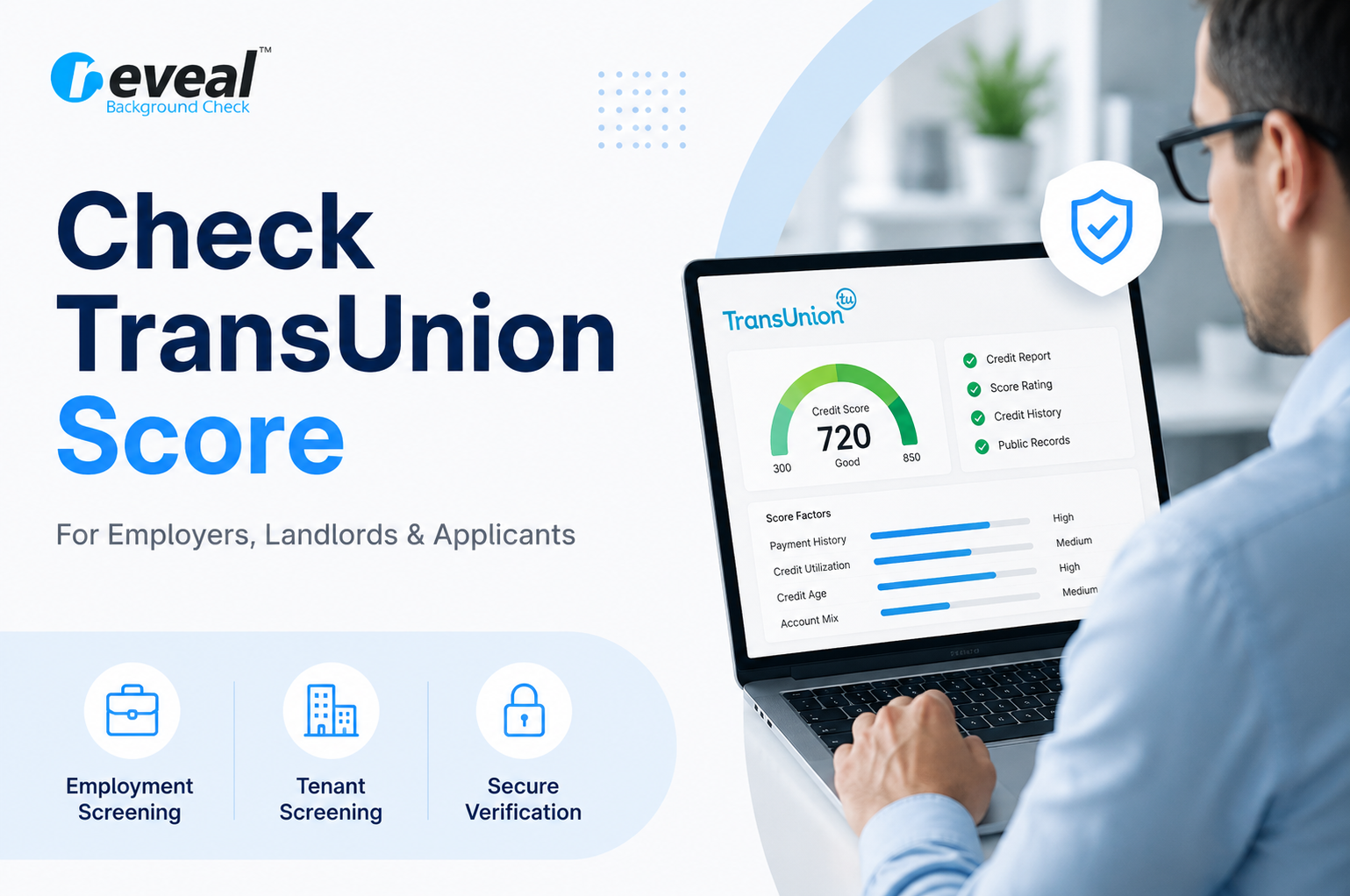
When people search “check TransUnion score,” they are usually trying to understand how credit information may affect a rental application, employment screening, or personal financial decision. For landlords, employers, and applicants, the TransUnion credit score can be an important part of a broader screening process, but it should not be confused with a complete background check.
A credit score gives insight into credit behavior. A background check may include identity verification, criminal record searches, employment verification, education verification, tenant screening, eviction history, and other records depending on the purpose of the screening. TransUnion offers consumer credit reports and scores, and its SmartMove tenant screening service provides landlords access to credit, criminal, and eviction reports for rental applicants.
For businesses, property managers, and applicants, knowing when and how to check TransUnion score information can help support better, more informed decisions.
What Does It Mean to Check TransUnion Score?
To check TransUnion score means reviewing a credit score based on data in a TransUnion credit report. This may include payment history, account activity, credit usage, length of credit history, and other credit-related information.
Applicants may want to check TransUnion score before applying for an apartment, loan, or job that may involve credit-related screening. Landlords may use credit report information to better understand financial responsibility. Employers may use credit-related reports only in certain situations and must follow applicable laws.
TransUnion says checking your own credit report is considered a soft inquiry and does not affect your score.
Why Applicants Should Check TransUnion Score Before Screening
Applicants should check TransUnion score before a background check or rental application because it helps them understand what a screening report may reveal.
Before applying, applicants can look for:
- Incorrect personal information
- Unknown accounts
- Late payment history
- High credit utilization
- Possible signs of identity theft
- Errors that may need to be disputed
This is especially useful for renters because landlords often use credit-related information to evaluate risk. If an applicant knows what is on their report ahead of time, they can correct errors or prepare explanations before the landlord reviews the application.
Does Checking a TransUnion Score Hurt Credit?
One of the most common questions is whether it hurts your credit to check TransUnion score information. In most cases, checking your own score is a soft inquiry. TransUnion explains that soft inquiries do not impact credit scores.
A hard inquiry is different. Hard inquiries usually happen when someone applies for credit, such as a credit card, auto loan, or mortgage. Applicants should understand the difference before authorizing any credit-related review.
“ No, checking your own TransUnion score does not hurt your credit. It is typically considered a soft inquiry. However, applying for new credit may trigger a hard inquiry, which can affect your score.”
How Landlords Use TransUnion Credit Information
Landlords and property managers may use credit reports during tenant screening to evaluate whether an applicant is financially responsible. A tenant screening report may include credit history, criminal records, and eviction information depending on the package and provider. TransUnion SmartMove states that it gives landlords access to renter credit, eviction, and criminal reports in minutes.
A landlord may review:
- Payment history
- Debt patterns
- Public records
- Eviction history
- Identity details
- Rental risk indicators
SmartMove also says that if a screening package includes a TransUnion credit report, the process results in a soft inquiry on the applicant’s credit history with no impact on the applicant’s credit score.
For renters, it is smart to check TransUnion score before submitting a rental application so they know where they stand.
Can Employers Check TransUnion Score?
Employers do not simply access someone’s credit score without rules. When employers use a background reporting company for employment screening, they must comply with the Fair Credit Reporting Act. The FTC says employers must get written permission before running a background check through a background reporting company.
Employment background checks can include information from different sources, including credit reports and criminal records, depending on the role and legal requirements. The FTC also notes that employment background checks are considered consumer reports.
Employers may consider credit-related information for roles involving money handling, financial responsibility, executive access, sensitive business records, or regulated positions. However, employers should use credit information carefully, consistently, and in compliance with federal, state, and local laws.
“ An employer may use credit-related background screening only with proper authorization and legal compliance. Employers should not treat a credit score as a complete measure of a candidate’s ability, character, or job performance.”
TransUnion Score vs. Background Check
A TransUnion score is not the same as a full background check. Businesses should understand the difference before making screening decisions.
A credit score may show:
- Credit usage
- Payment behavior
- Credit account history
- Credit inquiry activity
A background check may include:
- Identity verification
- Criminal background checks
- Employment verification
- Education verification
- Professional license checks
- Tenant screening
- Eviction records
- Credit report information, where permitted
That is why employers and landlords should not rely only on a score. A complete screening process gives a more accurate picture.
How Reveal Background Helps
Reveal Background helps employers, landlords, and businesses make more confident screening decisions with reliable background check solutions. Whether you need employment verification, tenant screening support, identity checks, or credit-related screening workflows, Reveal Background helps simplify the process.
Businesses looking to check TransUnion score information as part of a broader screening process should use a solution that supports compliance, accuracy, and secure reporting.
Final Takeaway
To check TransUnion score is to understand one part of a person’s credit profile. For applicants, it can help prepare for rental, financial, or employment-related screening. For landlords, it may support safer tenant decisions. For employers, credit-related screening must be handled carefully and legally.
The best approach is not to rely on one number alone. Use credit information together with a complete background screening process.
Ready to screen with confidence? Reveal Background helps businesses verify applicants, reduce risk, and make smarter hiring and rental decisions with secure background check solutions.
FAQ – Check TransUnion Score 2026
1. Should I check TransUnion score before applying for an apartment?
Yes. Applicants should check TransUnion score before applying so they can review possible errors, understand their credit position, and prepare for questions from a landlord.
2. Can a landlord see my TransUnion score?
A landlord may receive credit-related information if the applicant authorizes tenant screening. The exact information depends on the screening provider and report type.
3. Is tenant screening a hard inquiry?
Some tenant screening services use soft inquiries. SmartMove states that its tenant credit report process results in a soft inquiry with no impact on the applicant’s score.
4. Can employers see my credit score?
Employers may access certain credit-related background information where legally allowed and with proper written authorization. They must follow FCRA requirements when using a background reporting company.
5. Does a background check include credit history?
Sometimes. It depends on the purpose of the background check, the role, the industry, the applicant’s authorization, and applicable law.