Quick answer: Warehouse worker background check requirements are set by the employer, not by one federal law. Most employers run county and national criminal searches, an SSN trace and a sex-offender registry check, and add an MVR for drivers and equipment operators. FCRA rules require disclosure, written authorization and adverse action steps. Reveal Background returns most searches same day.
- Match the search package to the role: general pickers and packers need less than forklift operators, drivers and inventory-control staff.
- The Fair Credit Reporting Act (15 U.S.C. 1681) requires a standalone disclosure, written authorization and a two-step adverse action process.
- State and local rules (ban-the-box, lookback limits) change what you may ask and report, so set your policy by hiring location.
What background checks do warehouses actually require?
No federal statute lists mandatory checks for warehouse workers. Requirements come from your hiring policy, client contracts, insurance carriers and state law. Staffing firms often inherit requirements from the client site.
Reveal Background is an FCRA-compliant screening service for hiring teams. You can order each search below individually and pay per report, with no setup fee.
Which searches should you run for each warehouse role?
| Role | Core searches | Often added |
|---|---|---|
| Picker, packer, loader | County criminal, national criminal database, SSN trace, sex-offender registry | Employment verification, drug test |
| Forklift or equipment operator | Core searches plus MVR | Drug test, employment verification |
| Delivery or yard driver | Core searches plus MVR | Drug test; DOT testing if the role is covered |
| Inventory control, shipping clerk, supervisor | Core searches, federal criminal | Employment and education verification |
What each search covers
- County criminal: court records in the counties where the candidate has lived or worked.
- State and federal criminal: records at those court levels, useful for interstate or higher-value roles.
- National criminal database: a broad index that points to counties worth searching. It is a lead tool, not a substitute for county checks.
- SSN trace: verifies identity and returns address history to guide where to search.
- Sex-offender registry: checks registry records.
- MVR: a motor vehicle record showing license status and violations.
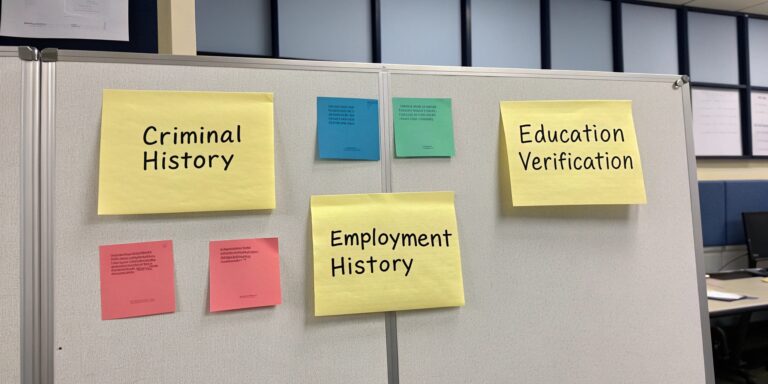
- Employment and education verification: confirms dates and titles the candidate reported.
What FCRA steps must you follow?
When you use a screening company, the report is a consumer report under the Fair Credit Reporting Act. The FTC explains the employer obligations in its guidance, Background Checks: What Employers Need to Know (as of the current FTC page).
- Disclosure: give the candidate a clear, standalone written notice that you may obtain a report.
- Authorization: get written permission before ordering.
- Pre-adverse action: before rejecting based on the report, send a copy of the report and the summary of rights.
- Waiting period: give the candidate a reasonable time to dispute errors.
- Adverse action: if you still decline, send final notice with the screening company’s contact details and dispute rights.
The CFPB publishes Regulation V, which implements the FCRA, and the summary of rights form used in these notices.
How do EEOC rules affect warehouse hiring?
The EEOC’s Enforcement Guidance on the Consideration of Arrest and Conviction Records in Employment Decisions under Title VII says blanket exclusions can create disparate impact risk. It recommends an individualized assessment that weighs the nature of the offense, the time since it occurred and the duties of the job. Apply the same criteria to every candidate for the same role.
What state limits apply?
Many states and cities have ban-the-box laws that delay criminal history questions until after an interview or a conditional offer. Some states limit reporting of older records, commonly to seven years, and some restrict use of arrests that did not lead to conviction. The FCRA itself limits reporting of most non-conviction records older than seven years. Confirm rules for every location where you hire, since multi-state staffing firms may face several at once.
How long does a warehouse background check take?
Reveal Background delivers same-day results on most searches. Counties with manual court retrieval, verification calls and MVRs from slower states can take longer. For high-volume seasonal hiring, order core searches at the offer stage so slower items run in parallel.
What about drug testing?
Many warehouses pair screening with a pre-employment drug test, especially for equipment operators. Reveal Background coordinates testing through American Screening Corp drug testing. Roles regulated by the Department of Transportation follow separate DOT testing rules, so confirm whether a position is covered.
Warehouse background check checklist
- Define search packages by role and document them in writing.
- Use a standalone FCRA disclosure and signed authorization.
- Check ban-the-box and lookback rules for each hiring location.
- Add an MVR for any role that drives or operates equipment.
- Apply the same standards to every candidate in the same role.
- Run an individualized assessment before any adverse decision.
- Send pre-adverse and adverse action notices in order.
- Keep records securely and limit access to those who need them.
How do you start?
Hiring teams can create an account at Reveal Background, choose searches by role and order per candidate. There is no setup fee, and you pay per report.
Frequently asked questions
Is a background check legally required to hire a warehouse worker?
Generally no. Federal law does not mandate it for typical warehouse roles, but clients, insurers or state rules may. If you run one, you must follow the FCRA.
What does a standard warehouse background check include?
Typically county criminal, national criminal database, SSN trace and sex-offender registry searches. Add an MVR for driving or equipment roles, and verifications when experience matters.
Can I reject a candidate for a criminal record?
Sometimes. Follow EEOC guidance on individualized assessment, check state limits, and complete pre-adverse and adverse action steps before declining.
How long do results take?
Reveal Background returns most searches the same day. Court retrieval, verification calls and some MVRs can take longer.
Sources
- FTC: Background Checks: What Employers Need to Know
- EEOC: Enforcement Guidance on the Consideration of Arrest and Conviction Records in Employment Decisions
- CFPB: Regulation V (12 CFR Part 1022), Fair Credit Reporting
This article is general information, not legal or medical advice; consult counsel on adverse action and state-specific requirements.